Alcea
Family Malvaceae — Genus Alcea
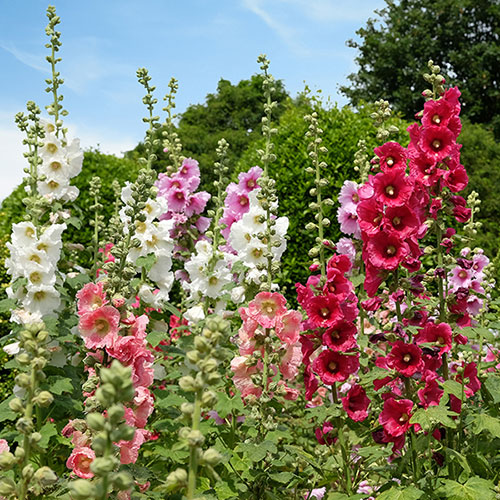
Alcea, commonly known as hollyhock, is a genus of classic cottage garden plants beloved for their towering spires of saucer-shaped flowers in every color of the rainbow. Few plants create such a dramatic vertical statement or evoke such strong feelings of nostalgia. Hollyhocks have been cultivated for centuries and remain essential in traditional, cottage, and pollinator garden designs. Their tall flower spikes attract bumblebees and hummingbirds in abundance.
Quick Facts
Bloom Time
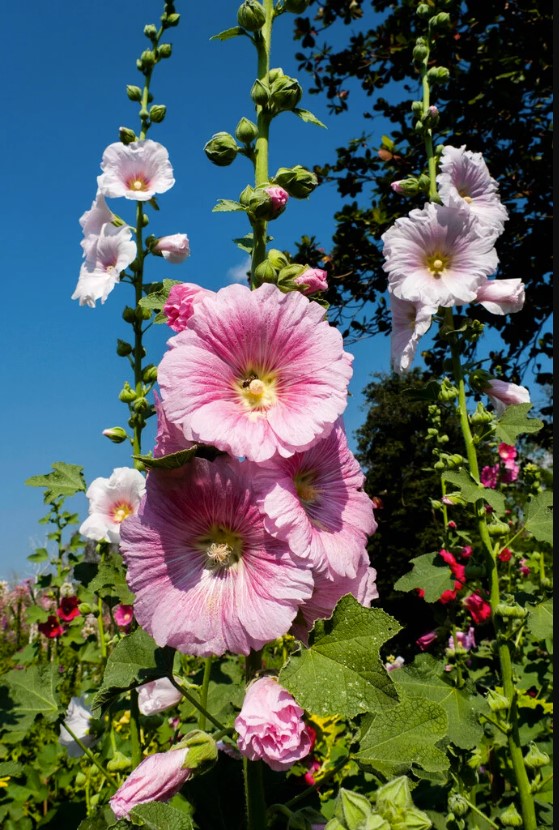
Hollyhocks produce their magnificent flower spikes in midsummer, typically July and August. Flowers open progressively from the bottom of the spike upward over several weeks, providing an extended display. Each individual flower can measure 3 to 5 inches across, and the full spike often carries 20 to 30 or more blooms.
Size and Growth Habit
Hollyhocks are among the tallest garden plants, with flower spikes reaching 4 to 8 feet and sometimes exceeding 10 feet in optimal conditions. They grow as a basal rosette of large, rounded, hairy leaves in the first year, then send up dramatic flowering spikes in the second year (biennial pattern). Some newer cultivars bloom in the first year from seed.
Hardiness Zones
Hollyhocks are hardy in USDA Zones 3 through 9. They tolerate both heat and cold effectively, though they are technically biennials or short-lived perennials that often self-sow to maintain their presence in the garden.
Light Requirements
Hollyhocks demand full sun with at least 6 to 8 hours of direct sunlight daily. They evolved along sunny walls, fences, and roadsides. Insufficient light causes weak, floppy stems and sparse flowering.
Soil and Water Requirements
Hollyhocks grow best in well-drained, moderately fertile soil. They tolerate poor soil but produce the most impressive spikes with moderate fertility. Water regularly during the growing season, especially during dry spells. Avoid waterlogged conditions, which promote crown rot.
Pruning
Cut flower spikes to the base after bloom if you want to prevent self-seeding, or leave them to scatter seed for next year's plants. Remove basal foliage affected by rust disease promptly. In mild climates, hollyhocks may produce a second, shorter bloom if cut back immediately after the first flowering.
Summer Care
Summer is hollyhock's main event. Stake tall varieties before they reach full height to prevent wind damage. Water deeply during dry spells. Monitor closely for rust disease and treat or remove affected leaves immediately.
Winter Care
Hollyhock rosettes are cold-hardy. First-year basal foliage often remains green through mild winters. Remove dead stems and foliage in late fall. Self-sown seedlings emerge in spring to continue the cycle.
Companion Plants
Pests and Diseases
- Hollyhock rust (Puccinia malvacearum): The most significant problem. Orange-brown pustules on leaf undersides causing disfigurement. Remove affected leaves promptly. Fungicide sprays can help prevent spread. Resistant varieties are available.
- Japanese beetles: Skeletonize leaves. Hand-pick or use traps.
- Slugs: Attack young rosettes. Use organic controls.
- Spider mites: In hot, dry conditions. Maintain adequate watering.
Common Varieties
Toxicity
Non-toxic to pets and humansHollyhocks are completely non-toxic to humans and pets. In fact, the flowers are edible and have been used historically in salads and as natural food coloring. They are safe for all garden settings.
Care Difficulty
Hollyhocks are easy to grow from seed but require attention to rust prevention, staking, and succession planting. Their biennial nature means gardeners must plan ahead for continuous displays year after year.