Ajuga
Family Lamiaceae — Genus Ajuga
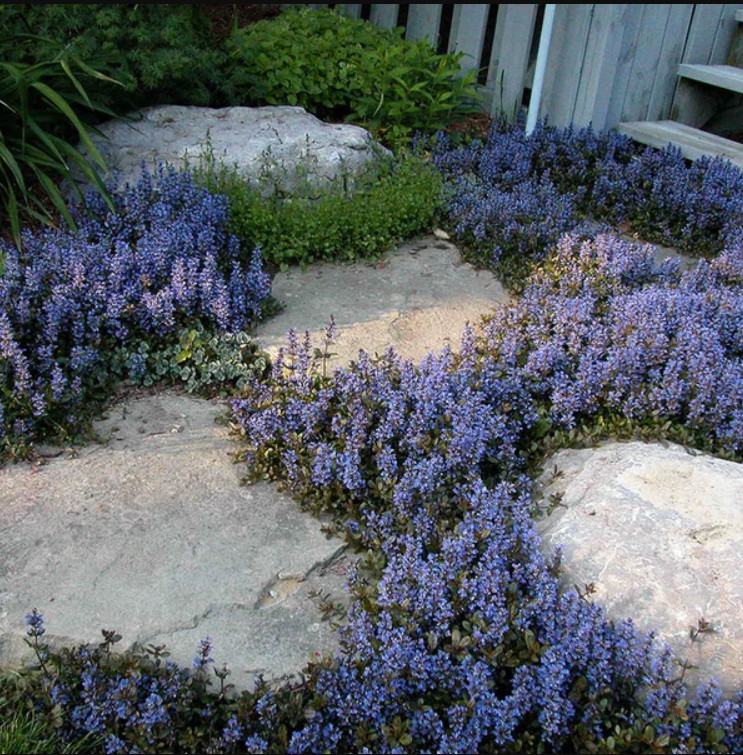
Ajuga, commonly known as bugleweed or carpet bugle, is one of the most popular and effective evergreen ground cover plants for shaded areas. Valued for its dense, weed-suppressing mat of colorful foliage and spikes of spring flowers, ajuga transforms bare ground beneath trees and along shady borders into a living carpet of color. Cultivars offer an impressive range of foliage colors from deep bronze to variegated cream, pink, and chocolate.
Quick Facts
Bloom Time
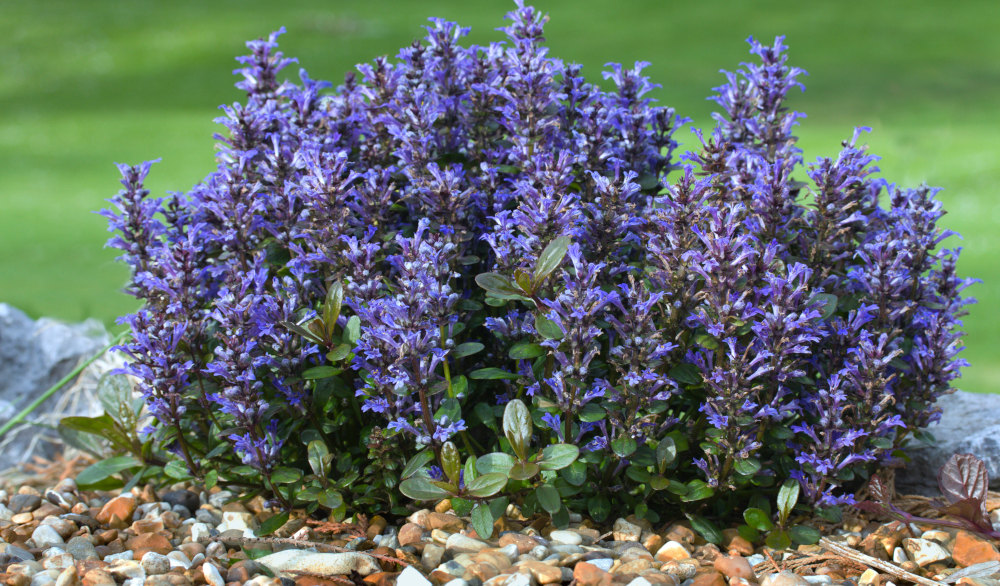
Ajuga produces dense spikes of small, tubular flowers in mid to late spring, typically April through June. The flower spikes rise 4 to 8 inches above the foliage mat and are most commonly blue to purple, though pink and white forms exist. When planted en masse, the effect of hundreds of blue flower spikes is breathtaking.
Size and Growth Habit
Ajuga forms a low, dense mat just 4 to 8 inches tall (slightly taller when in flower). It spreads rapidly by stolons (runners) to create a tight ground cover. The rosettes of glossy, often colorful leaves overlap to form an effective weed-suppressing carpet.
Hardiness Zones
Ajuga is reliably hardy in USDA Zones 3 through 9, making it suitable for most temperate gardens. It tolerates heat, cold, and humidity with equal ease.
Light Requirements
Ajuga grows best in partial to full shade, though it tolerates morning sun, especially in northern climates. Deep-colored foliage varieties develop their richest colors in bright indirect light. In full sun, plants may scorch in hot climates.
Soil and Water Requirements
Ajuga prefers moist, well-drained soil but adapts to a wide range of conditions. Avoid poorly drained, consistently wet sites where crown rot can develop. Once established, ajuga is moderately drought-tolerant but performs best with regular moisture.
Pruning
After flowering, mow or shear flower stalks to maintain a tidy appearance. Periodically thin overcrowded patches to improve air circulation and reduce disease risk. Remove any runners that escape into unwanted areas.
Summer Care
Ajuga is generally trouble-free in summer. Water during extended dry spells. Watch for signs of crown rot in humid climates with poor air circulation. The colorful foliage provides year-round interest.
Winter Care
Ajuga is evergreen in most of its range and provides attractive winter ground cover. No special protection is needed. The foliage may take on deeper bronze or purple tones in cold weather, adding seasonal interest.
Companion Plants
Pests and Diseases
- Crown rot: The most serious problem, caused by poor drainage and air circulation in humid conditions. Thin overcrowded plantings and ensure good drainage.
- Slugs: May feed on foliage. Use organic controls if damage is significant.
- Powdery mildew: Occasional in humid conditions. Improve air circulation.
Common Varieties
Toxicity
Non-toxic to pets and humansAjuga is considered non-toxic to humans, dogs, and cats. It has been used in traditional medicine in some cultures. It is safe for gardens frequented by children and pets.
Care Difficulty
Ajuga is one of the easiest ground covers to establish and maintain. Once planted, it requires minimal care beyond occasional watering and thinning of overcrowded areas. Its main challenge is controlling its vigorous spread.