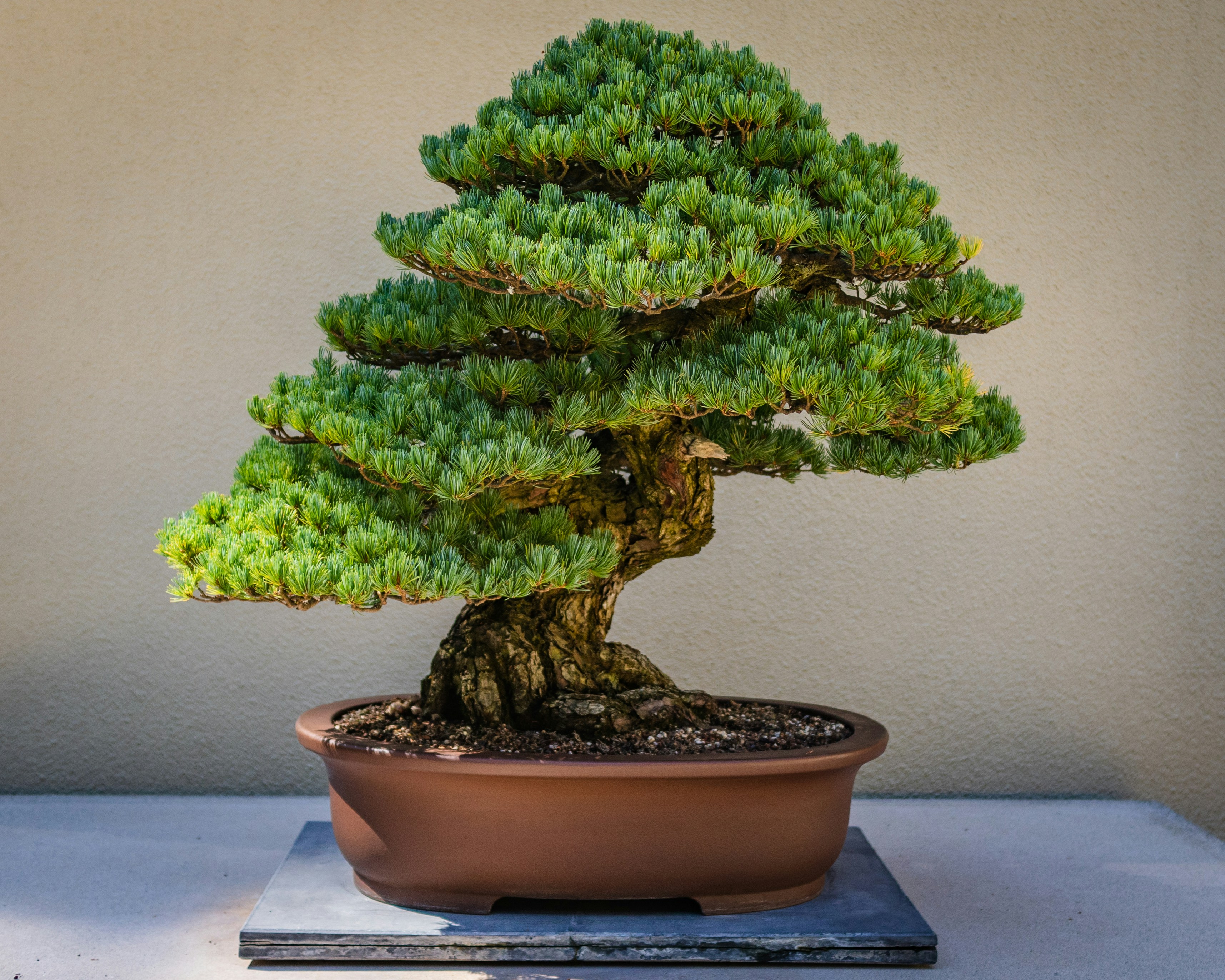
A bonsai tree is a living tree grown in a small container and shaped through pruning, wiring, and root restriction to resemble a full-sized tree in miniature. The word "bonsai" (盆栽) translates to "tray planting" in Japanese. Bonsai trees are not a specific species — almost any perennial woody-stemmed tree or shrub can become a bonsai.
This guide covers 12 bonsai species, 5 recognized styles, care fundamentals (light, water, soil, pruning), 3 propagation methods, common problems and fixes, pet safety, and buying advice with real price ranges. Whether you are starting your first tree or refining a collection, every section answers a specific question without filler.
Quick reference: Ficus is the best bonsai tree for beginners. It tolerates low light, inconsistent watering, and indoor conditions — 3 factors that kill most other bonsai species.
What Is a Bonsai Tree?
A bonsai tree is an ordinary tree species cultivated in a shallow container, kept small through deliberate pruning and root confinement rather than genetic modification. Bonsai is a horticultural art — not a plant species. Any tree with woody stems, true branches, and the ability to survive in a pot can become a bonsai tree.
The practice involves 4 core techniques: pruning (removing branches and foliage), wiring (shaping branch direction), root reduction (trimming the root system during repotting), and defoliation (removing leaves to encourage smaller regrowth on deciduous species). These techniques, applied over months and years, give bonsai trees their distinctive aged appearance at a fraction of natural size.
Bonsai trees range from 5 cm (2 inches) to over 100 cm (40 inches) tall. The smallest classification, Keshitsubo, fits on a fingertip. The largest, Imperial bonsai, can exceed 200 cm and require two people to move. Most home bonsai fall between 15–60 cm.
Are Bonsai Trees Real Trees?
Yes, bonsai trees are real, living trees. They are not artificial, plastic, or genetically dwarfed plants. A bonsai juniper is the same species (Juniperus) that grows 15 meters tall in the wild. The difference is container size and active shaping by the grower.
Bonsai trees photosynthesize, grow new branches, drop leaves in autumn (deciduous species), produce flowers and fruit, and respond to seasonal changes exactly like full-sized trees. They require soil, water, sunlight, and nutrients. A common misconception is that bonsai are "special miniature plants." In reality, regular nursery stock — a young maple, elm, or pine from a garden center — is one of the most popular starting points for bonsai.
Why Do Bonsai Trees Stay Small?
Bonsai trees stay small because their root system is restricted by a shallow pot, and their foliage and branches are regularly pruned. There are 3 reasons a bonsai remains miniature:
- Root confinement. The shallow pot limits root expansion, which directly limits the tree's ability to support large top growth.
- Branch and leaf pruning. Regular trimming removes new growth and keeps the canopy compact. Pruning during the growing season redirects energy to inner branches.
- Controlled resources. The small soil volume in a bonsai pot holds limited water and nutrients. The tree can only grow as much as its restricted root system can supply.
Bonsai trees are not genetically altered. Remove a bonsai from its pot, plant it in the ground, stop pruning, and it will resume growing toward its natural size over several years.
What Does a Bonsai Tree Represent?
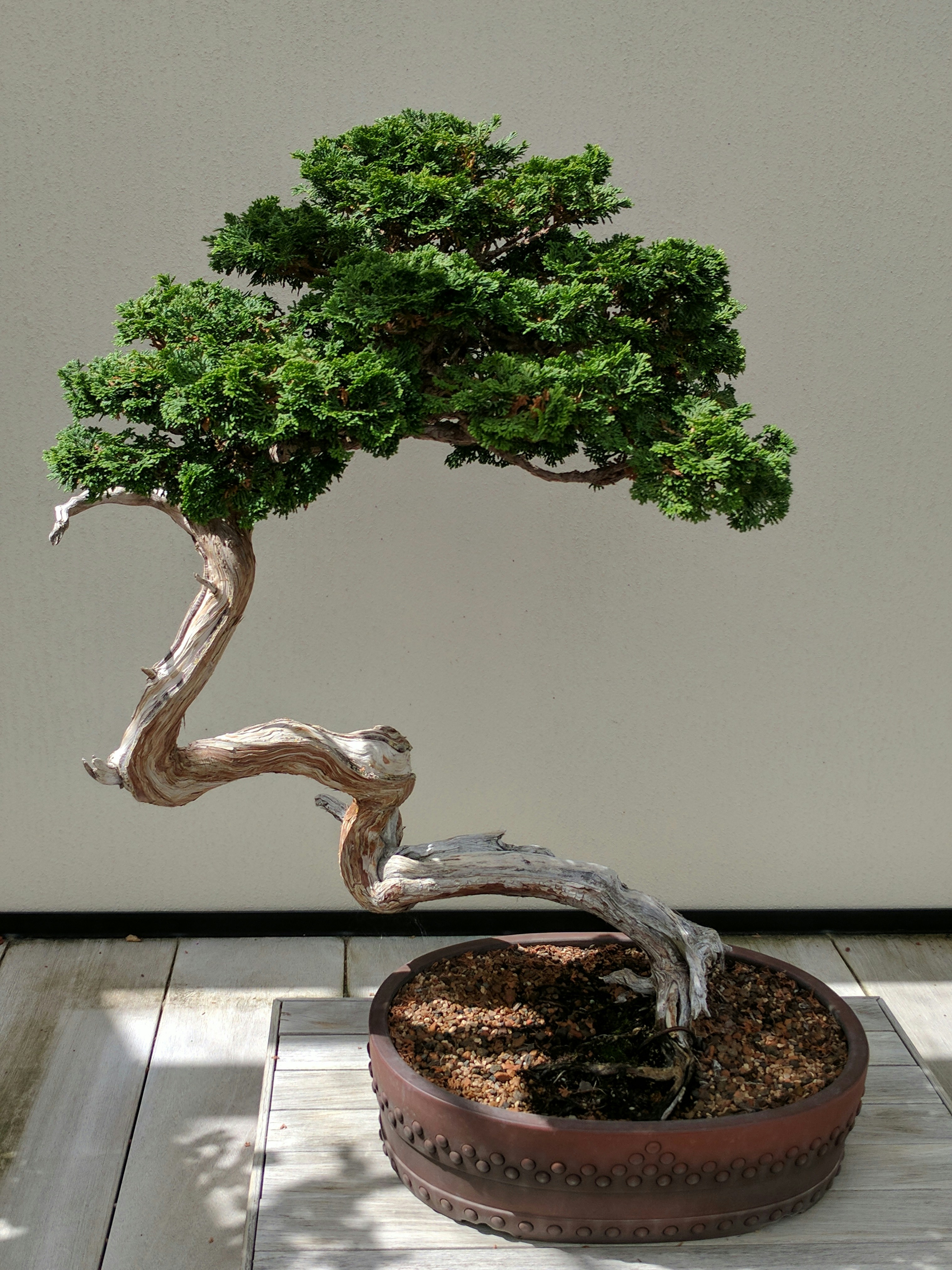
A bonsai tree represents patience, harmony between human effort and nature, and the beauty of imperfection. In Japanese aesthetics, bonsai embodies wabi-sabi — the acceptance of transience and imperfection. A twisted trunk, exposed deadwood (called "jin"), and asymmetric branch placement are valued over symmetry.
Bonsai also carries symbolic meaning by species. Pine bonsai represent longevity and endurance. Maple bonsai symbolize seasonal change and the passage of time. Flowering bonsai, such as cherry and plum, represent renewal and new beginnings. In Chinese tradition (where the art originated as penjing), miniature landscapes in trays symbolized a connection between the human world and the natural world.
Where Do Bonsai Trees Come From?
Bonsai trees originated in China over 2,000 years ago as "penjing" (tray landscapes) before the art was adopted and refined in Japan starting around the 6th century. The practice spread to the Western world in the 20th century through international exhibitions, books, and trade.
Bonsai Origin and History
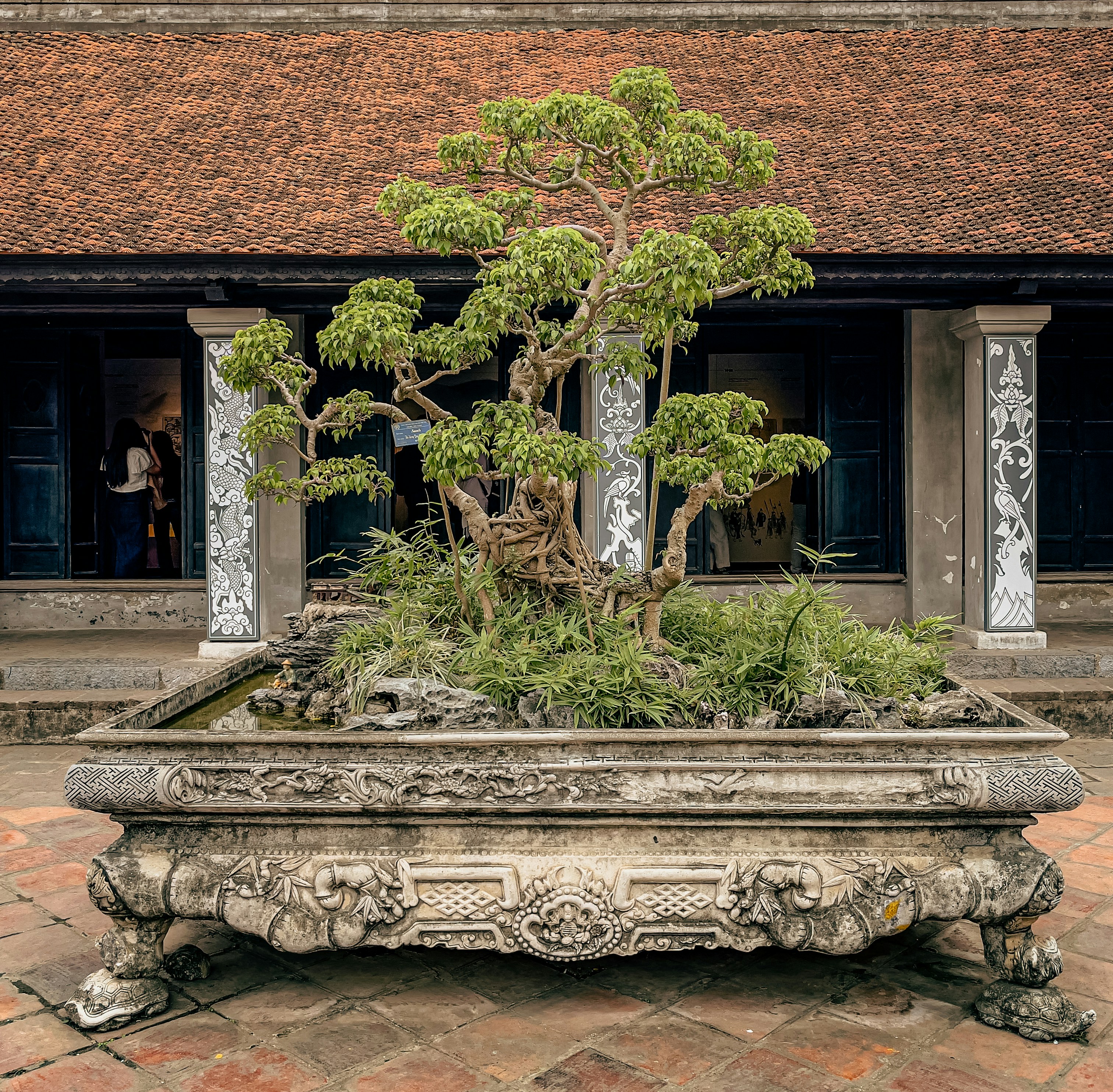
The earliest form of growing miniature trees in containers appeared during China's Han Dynasty (206 BCE – 220 CE). Chinese scholars cultivated "penjing" — miniature landscapes in shallow trays that included rocks, water features, and figurines alongside small trees. Buddhist monks brought penjing to Japan by the 6th century as part of broader cultural exchange.
The Japanese simplified the Chinese approach. They removed figurines and landscape elements, focused attention on the tree itself, and began using smaller, unglazed pots. By the 14th century, the term "hachi no ki" (bowl's tree) was in common use in Japan. The word "bonsai" (tray planting) replaced it in the early 19th century.
3 key historical milestones shaped modern bonsai:
- 1195 CE: The Saigyo Monogatari Emaki scroll became the earliest known Japanese artwork to depict dwarfed potted trees.
- 1934: The first Kokufu-ten exhibition was held in Tokyo's Ueno Park — an annual event that continues today as the world's most prestigious bonsai show.
- 1989: The World Bonsai Friendship Federation (WBFF) launched the first global bonsai convention series in Omiya, Japan.
One of the oldest surviving bonsai trees, a five-needle pine called "Sandai Shogun," sits in the Tokyo Imperial Palace collection. It is estimated at over 500 years old and was first trained as a bonsai by 1610 under Tokugawa Iemitsu.
Are Bonsai Trees Japanese or Chinese?
Bonsai trees are both Chinese and Japanese in origin, but the modern art form known as "bonsai" is a Japanese development. The Chinese art of penjing predates bonsai by over a thousand years. Penjing focused on tray landscapes with multiple trees, rocks, and miniature figures. Japanese practitioners adopted the concept and stripped it down to focus on a single tree's form and character.
The distinction matters. Penjing remains a separate art in China, with different aesthetic goals and classification systems. Bonsai, as practiced globally today, follows Japanese aesthetic principles, Japanese terminology (jin, shari, nebari), and Japanese styling conventions. Both arts share roots but developed into distinct practices.
When Did Bonsai Become Popular?
Bonsai became broadly popular in Japan in the late 18th century and reached Western audiences in the mid-20th century. The Tenmei era (1781–1788) saw the first annual exhibitions of dwarf potted pines in Kyoto, where collectors from 5 Japanese provinces submitted trees for public ranking.
Western popularity accelerated after 3 events:
- 1937: Alfred Koehn published Japanese Tray Landscapes in English in Beijing.
- 1957: Yuji Yoshimura published The Art of Bonsai, which became the standard English-language bonsai reference for over 30 printings.
- 1970: A large bonsai display at Expo '70 in Osaka introduced the art to a global audience and sparked international organizing.
Today, there are over 100,000 bonsai enthusiasts in roughly 1,500 clubs and associations worldwide, with an estimated 5 million additional unaffiliated hobbyists.
Best Bonsai Trees by Purpose
The right bonsai species depends on where you plan to grow it, your experience level, and what outcome you want — fast growth, flowers, or a tree that forgives mistakes. Below are specific recommendations for 5 common goals.
Best Bonsai Tree for Beginners
The best bonsai tree for beginners is a Ficus (Ficus retusa or Ficus microcarpa). Ficus tolerates 3 conditions that kill most other bonsai species: low light, missed waterings, and warm indoor temperatures year-round. It also responds well to pruning and produces aerial roots, which add visual character quickly.
4 other beginner-friendly bonsai species:
- Chinese Elm (Ulmus parvifolia) — adapts to both indoor and outdoor growing, recovers quickly from pruning mistakes
- Dwarf Jade (Portulacaria afra) — stores water in its leaves, making it drought-tolerant and hard to overwater
- Juniper (Juniperus) — the most popular outdoor beginner bonsai, widely available at garden centers
- Carmona (Fukien Tea) — produces small white flowers indoors and has naturally small leaves
Start with a Ficus or Chinese Elm, if you want a bonsai that tolerates beginner-level care errors. Avoid junipers indoors — they require outdoor conditions to survive.
Best Bonsai Tree for Indoors
The best bonsai tree for indoors is the Ficus bonsai, followed by Carmona (Fukien Tea), Schefflera (Umbrella Tree), and Dwarf Jade. These 4 species are tropical or subtropical — they do not need a cold winter dormancy period and tolerate the stable 18–24°C (64–75°F) temperatures found in homes.
Indoor bonsai need 3 things most homes lack: high light, consistent humidity, and airflow. Place indoor bonsai within 30 cm of a south-facing window for maximum light, or use a full-spectrum grow light for 10–12 hours daily. Keep humidity above 40% by placing the pot on a humidity tray filled with pebbles and water.
Best Bonsai Tree for Home
The best bonsai tree for home display is a Chinese Elm (Ulmus parvifolia). Chinese Elm has a refined, naturally branching silhouette that looks mature even at a young age. Its small, glossy leaves stay proportional to the miniature trunk, and it adapts to both indoor and outdoor placement on balconies or patios.
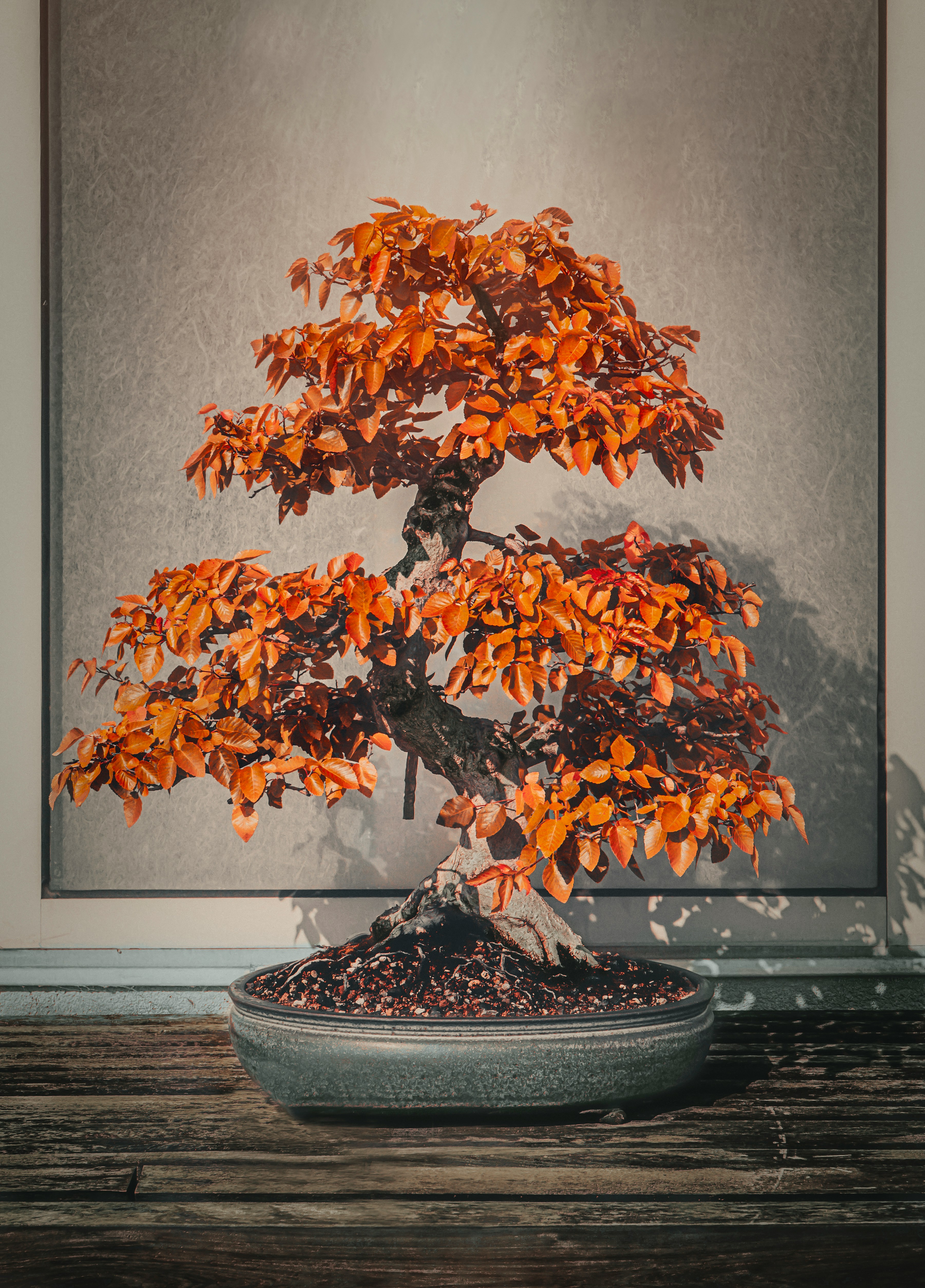
For a home with limited natural light, choose Ficus. For a home with a covered patio or balcony that gets partial shade, Japanese Maple (Acer palmatum) creates a striking seasonal display with red and orange autumn foliage.
Fastest-Growing Bonsai Trees
The fastest-growing bonsai trees are Chinese Elm, Ficus, Dwarf Jade, and Willow (Salix). Chinese Elm can produce a visible trunk thickening and multiple branch layers within 2–3 years from nursery stock. Ficus grows new branches within weeks of pruning.
Growth speed depends on 4 factors: species genetics, pot size (larger pots allow faster growth), fertilizer schedule, and light exposure. To maximize growth speed, plant a pre-bonsai in an oversized training pot, fertilize biweekly during the growing season (March–September), and provide full sun.
Flowering and Fruiting Bonsai Trees
Flowering bonsai species include Azalea (Rhododendron), Chinese Quince (Pseudocydonia sinensis), Bougainvillea, Wisteria, and Cherry Blossom (Prunus). Fruiting bonsai species include Crabapple (Malus), Pomegranate (Punica granatum), and Citrus (Citrus reticulata).
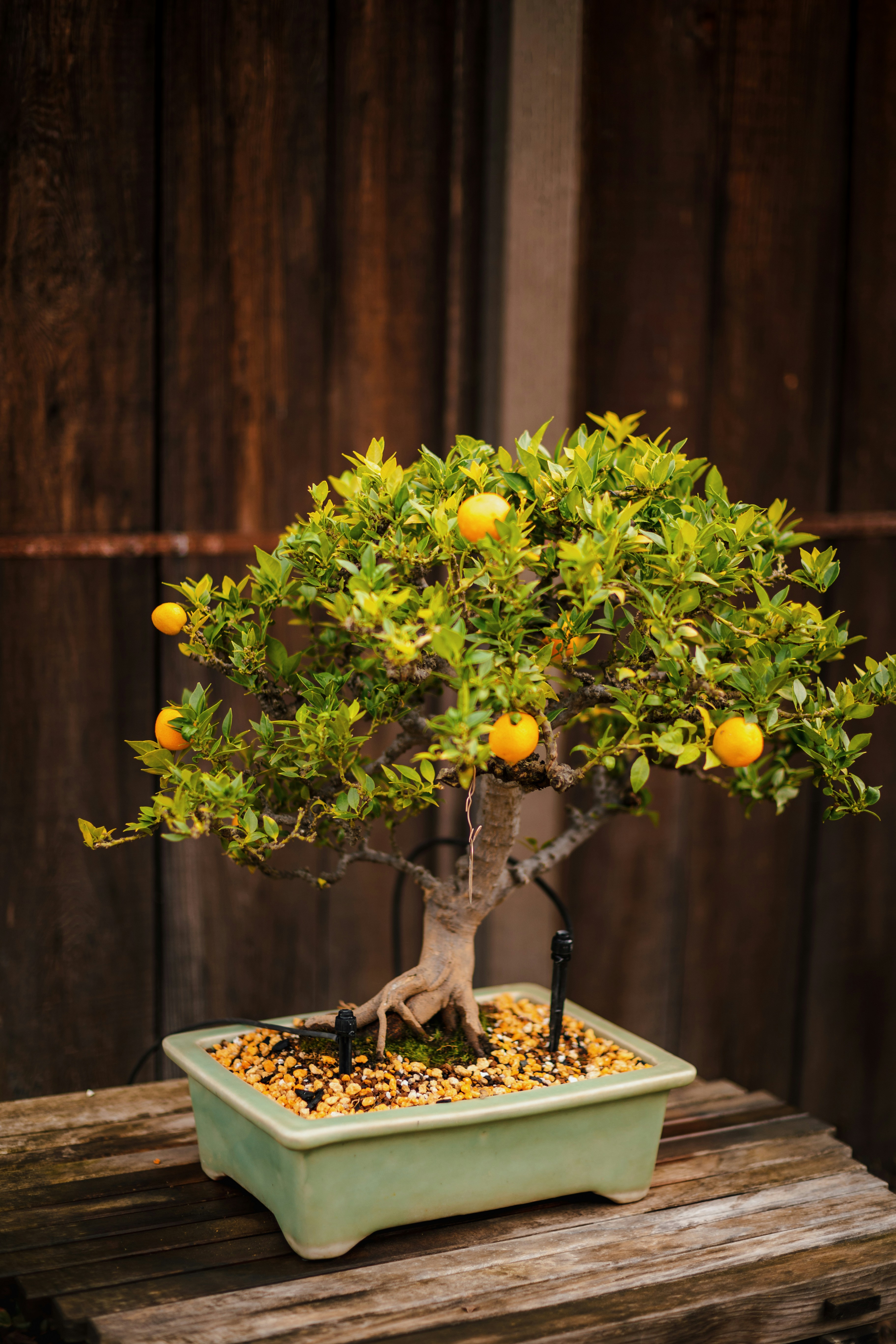
Flowering and fruiting bonsai require more sunlight than foliage-only species — a minimum of 6 hours direct sun daily during the growing season. They also need higher phosphorus fertilizer (a formula with a higher middle number, like 6-10-6) during the bloom period to support flower and fruit production.
Indoor vs Outdoor Bonsai Trees
The single most common reason bonsai trees die is placement — growing an outdoor species indoors, or an indoor species outside in freezing weather. Understanding this distinction prevents the majority of bonsai failures.
| Factor | Indoor Bonsai | Outdoor Bonsai |
|---|---|---|
| Climate origin | Tropical / subtropical | Temperate / cold-hardy |
| Dormancy | No dormancy needed | Requires cold winter dormancy |
| Common species | Ficus, Carmona, Schefflera, Dwarf Jade | Juniper, Pine, Maple, Elm, Azalea |
| Temperature range | 15–30°C (59–86°F) | -10°C to 35°C (14–95°F) |
| Light needs | South-facing window or grow light | Full sun (4–8 hours) |
| Watering frequency | Every 2–4 days | Daily in summer, weekly in winter |
Can Bonsai Trees Grow Indoors?
Yes, tropical and subtropical bonsai species can grow indoors successfully. Ficus, Carmona, Schefflera, and Dwarf Jade are the 4 species best suited for indoor growing because they do not need a cold dormancy period and tolerate lower light.
Temperate species — juniper, maple, pine, and most deciduous trees — cannot survive indoors long-term. They need a cold winter dormancy (below 10°C / 50°F for 8–12 weeks) to complete their growth cycle. Keeping a juniper indoors year-round leads to slow decline and death within 1–2 years.
Which Bonsai Trees Can Live Indoors?
6 bonsai species that live well indoors:
- Ficus retusa / Ficus microcarpa — the single most reliable indoor bonsai
- Carmona (Fukien Tea) — produces white flowers, prefers stable warmth
- Schefflera (Dwarf Umbrella) — fast-growing, tolerant of lower light
- Crassula ovata (Jade Tree) — succulent species, extremely drought-tolerant
- Sageretia theezans (Sweet Plum) — small glossy leaves, responds well to indoor pruning
- Serissa foetida (Tree of a Thousand Stars) — tiny white flowers, needs consistent moisture
Can Bonsai Trees Live Outside?
Yes, most bonsai species thrive outdoors and many require it. Juniper, pine, maple, elm, and azalea are all outdoor species that need direct sunlight, natural temperature changes, and winter dormancy. Outdoor bonsai placed in full sun with natural rainfall grow stronger and faster than indoor trees.
Place outdoor bonsai where they receive at least 4 hours of direct sunlight daily. Protect them from extreme afternoon heat in summer (above 38°C / 100°F) by providing light afternoon shade. In winter, protect the pot and roots from hard freezes by placing the tree in an unheated garage, cold frame, or mulching the pot into the ground.
Can Bonsai Trees Survive Winter?
Yes, cold-hardy outdoor bonsai trees survive winter and need it. Temperate species require 8–12 weeks of temperatures below 10°C (50°F) to enter dormancy. Without this cold period, they will weaken and eventually die.
Winter protection focuses on the roots, not the canopy. A bonsai pot is shallow and freezes faster than the ground. Protect the root zone by using 1 of these 3 methods:
- Bury the pot in garden soil up to the first branch, covering with mulch.
- Store in an unheated space — garage, shed, or cold frame — where temperatures stay between -5°C and 10°C (23–50°F).
- Wrap the pot in bubble wrap or burlap insulation, leaving the canopy exposed to cold air.
Types of Bonsai Trees
Bonsai tree types are classified by species, by visual style, and by size. Understanding all 3 classification systems helps you choose a tree that matches your skill level, growing conditions, and aesthetic preference.
Common Bonsai Species
12 bonsai species are commonly grown worldwide:
| Species | Type | Indoor/Outdoor | Beginner-Friendly |
|---|---|---|---|
| Ficus retusa | Tropical broadleaf | Indoor | Yes |
| Chinese Elm | Deciduous | Both | Yes |
| Juniper (Juniperus) | Conifer evergreen | Outdoor | Yes |
| Japanese Maple | Deciduous | Outdoor | No |
| Japanese Black Pine | Conifer evergreen | Outdoor | No |
| Japanese White Pine | Conifer evergreen | Outdoor | No |
| Carmona (Fukien Tea) | Tropical broadleaf | Indoor | Yes |
| Azalea (Satsuki) | Flowering shrub | Outdoor | No |
| Dwarf Jade | Succulent | Indoor | Yes |
| Zelkova (Japanese Elm) | Deciduous | Outdoor | Yes |
| Crabapple (Malus) | Fruiting deciduous | Outdoor | No |
| Bougainvillea | Tropical flowering | Outdoor (warm) | Yes |
Bonsai Styles
There are 5 recognized traditional bonsai styles, each defined by trunk angle and branch arrangement:
- Formal Upright (Chokkan). Straight vertical trunk with branches decreasing in size from bottom to top. The most symmetrical and structured style.
- Informal Upright (Moyogi). Trunk curves gently left and right as it rises, with branches at each outer curve. The most common bonsai style.
- Slanting (Shakan). Trunk grows at a 60–80° angle from the soil surface, with roots visibly anchoring the opposite side.
- Cascade (Kengai). Trunk drops below the base of the pot, mimicking a tree growing off a cliff edge. Requires a tall, narrow pot.
- Semi-Cascade (Han-Kengai). Trunk extends horizontally or slightly below the pot rim but does not drop as far as full cascade.
Other recognized styles include Windswept (Fukinagashi), Forest/Group Planting (Yose-ue), Literati (Bunjin), Root-over-Rock (Sekijoju), and Raft (Ikadabuki).
Bonsai Size Classifications
Bonsai trees are classified into 6 size categories:
| Classification | Height | Hands to Carry |
|---|---|---|
| Keshitsubo (poppy seed) | 3–8 cm (1–3 in) | Fingertip |
| Shito (fingertip) | 5–10 cm (2–4 in) | 1 finger |
| Mame (bean) | 5–15 cm (2–6 in) | 1 hand |
| Shohin (small) | 15–25 cm (6–10 in) | 1 hand |
| Chuhin (medium) | 25–46 cm (10–18 in) | 2 hands |
| Omono / Imperial | 60–120+ cm (24–48+ in) | 2 people |
Shohin bonsai (15–25 cm) are the most popular for home display and exhibitions. Mame bonsai (under 15 cm) are gaining popularity but require more precise watering due to their tiny pot size — soil dries out within hours in warm weather.
Bonsai Tree Care Basics
Bonsai tree care follows the same principles as caring for any tree — water, light, soil, and nutrients — but the small pot size means every element needs closer attention. Below are the 7 care fundamentals.
Light Requirements
Most bonsai trees need 4–6 hours of direct sunlight daily. Outdoor species (juniper, pine, maple) perform best in full sun. Indoor tropical species (ficus, carmona) need a bright south-facing window or a full-spectrum LED grow light running 10–12 hours per day.
2 signs your bonsai is not getting enough light: leggy, stretched growth toward the window (etiolation), and pale or yellowing leaves. Rotate the tree 90° every 2 weeks to ensure even light distribution across the canopy.
Watering
Water your bonsai tree when the top 1 cm (½ inch) of soil feels dry to the touch. Do not water on a fixed schedule — frequency depends on 5 variables: species, pot size, soil composition, temperature, and humidity.
Water thoroughly until water flows freely from the drainage holes at the bottom of the pot. This ensures the entire root ball is saturated. Let excess water drain completely — bonsai roots sitting in standing water develop root rot within days.
General watering frequency ranges:
- Summer (hot weather): every 1–2 days for outdoor bonsai, every 2–3 days for indoor
- Spring/Autumn: every 2–4 days
- Winter: every 4–7 days for indoor bonsai, minimal for dormant outdoor trees
Watering tip: Use a watering can with a fine rose (nozzle) to avoid washing soil out of the pot. Avoid tap water high in chlorine — let it sit for 24 hours before use, or use filtered/rainwater.
Bonsai Soil
Bonsai soil is not regular potting soil. Standard potting mix retains too much water and compacts over time, suffocating the roots. Bonsai soil is a coarse, granular mix designed for 3 functions: drainage, aeration, and water retention in balance.
A standard bonsai soil mix contains 3 components:
- Akadama — a fired Japanese clay that retains moisture and breaks down over time (signals when to repot)
- Pumice — volcanic rock that provides aeration and prevents compaction
- Lava rock — retains some moisture and adds structure to the mix
A common ratio is 1:1:1 (equal parts akadama, pumice, lava rock) for deciduous trees. Conifers like pine and juniper benefit from a mix with more drainage: 1 part akadama, 1 part pumice, 2 parts lava rock. Tropical indoor bonsai can use a slightly more moisture-retentive mix: 2 parts akadama, 1 part pumice, 1 part lava rock.
Bonsai Pots and Drainage
Every bonsai pot must have drainage holes. Bonsai pots are intentionally shallow — typically 5–10 cm deep — to restrict root growth and keep the tree proportional. The shallow depth means drainage is critical. Without holes, water pools at the bottom and causes root rot.
Cover drainage holes with mesh screens to prevent soil from washing out while allowing water to flow freely. Use wire through the drainage holes to anchor the tree firmly in the pot during repotting — bonsai trees sit on top of the soil, not deep inside it.
Pot sizing rule: the pot length should be roughly two-thirds of the tree's height for upright styles and two-thirds of the tree's width for cascade styles.
Fertilizing
Fertilize bonsai trees every 2 weeks during the growing season (spring through autumn) and stop during winter dormancy. Bonsai pots hold limited soil, and nutrients deplete quickly. Without regular fertilizing, the tree starves.
Use a balanced fertilizer (NPK ratio around 10-10-10) for general growth. Switch to a low-nitrogen formula (like 3-10-10) in late summer and autumn to harden off new growth before winter. Solid organic fertilizer cakes (such as Biogold) placed on the soil surface provide slow-release nutrients over 4–6 weeks.
Repotting and Transplanting
Repot bonsai trees every 2–3 years for young, fast-growing trees and every 4–5 years for mature specimens. Repotting serves 2 purposes: replacing exhausted soil and trimming circling roots that make the tree pot-bound.
Repot in early spring, just before buds open. This timing gives the tree an entire growing season to recover and establish new roots. During repotting, trim up to one-third of the root mass with sharp scissors, comb out the root ball with a root hook, and replant in fresh bonsai soil.
3 signs a bonsai needs repotting:
- Water sits on the soil surface and drains very slowly (compacted soil)
- Roots circle the inside of the pot or push out through drainage holes
- The tree shows reduced vigor despite normal watering and fertilizing
Pruning and Wiring
Pruning removes branches and foliage to shape the tree. Wiring bends branches into position using anodized aluminum or copper wire. These are the 2 primary techniques for creating and maintaining bonsai form.
There are 2 types of pruning:
- Structural pruning — removes large branches to establish the tree's basic shape. Done in late winter or early spring while the tree is dormant.
- Maintenance pruning — trims new shoots and leaves during the growing season to maintain shape and encourage back-budding (new growth closer to the trunk).
Wiring involves wrapping wire at a 45° angle along branches and bending them into position. Wire stays on for 3–6 months until the branch holds its new shape. Check wire monthly — growing branches can thicken and cause wire to cut into the bark, leaving permanent scars.
How Bonsai Trees Are Grown
There are 3 primary methods to start a bonsai tree. Each method offers a different balance between control, cost, and time.
Growing Bonsai From Seed
Growing bonsai from seed (called "Misho" in Japanese) gives complete control over the tree's shape from the start, but requires a minimum of 3–5 years before the seedling is mature enough to begin styling.
There is no such thing as a "bonsai seed." Bonsai seeds are regular tree seeds — oak, maple, pine, elm. The "bonsai seed kits" sold online contain ordinary tree seeds packaged with small pots and soil. Some seeds require cold stratification (4–12 weeks in a refrigerator) before they will germinate.
Growing from seed is a long-term commitment. Most bonsai growers use seed-grown trees as a secondary project while working with faster methods for their main trees.
Growing Bonsai From Cuttings
Growing bonsai from cuttings ("Sashiki" in Japanese) saves about 1 year compared to growing from seed and produces a tree genetically identical to the parent plant. Cut a healthy branch (10–15 cm long) from a mature tree during the growing season, dip the cut end in rooting hormone, and plant it in a moist mix of perlite and peat moss.
Cuttings from species with soft wood (ficus, jade, elm) root within 3–6 weeks. Hardwood species (pine, juniper, maple) take 2–4 months and have lower success rates. Keep cuttings in indirect light and high humidity (cover with a plastic bag or propagation dome) until roots establish.
Growing Bonsai From Nursery Stock
Buying nursery stock (prebonsai) is the fastest and most popular way to start a bonsai. Nursery stock is a young garden plant, typically 2–5 years old, available at garden centers for $10–$30. Look for a tree with a thick trunk relative to its height, visible root flare (nebari) at the base, and interesting movement or taper in the trunk.
After purchasing nursery stock, wait until early spring to begin styling. Remove the tree from its nursery pot, reduce the root ball by one-third, and plant it in a bonsai training pot with proper bonsai soil. Begin structural pruning to establish 2–3 primary branches and a clear apex.
How Big Can Bonsai Trees Get?
Bonsai trees can grow as large as 120+ cm (4+ feet) tall in the Imperial (Dai) size classification. Imperial bonsai are rare, typically displayed in formal Japanese gardens and institutions, and require 2 people to carry. Most home bonsai are kept between 15–60 cm (6–24 inches).
A bonsai has no genetic size limit. Its size is determined by the pot size, pruning schedule, and the grower's intent. A bonsai tree that stops being pruned and is planted in the ground will resume growing toward its species' natural height.
Can Bonsai Trees Grow Fruit?
Yes, bonsai trees can grow fruit. Any fruit-bearing species trained as bonsai will produce fruit when it reaches reproductive maturity. Crabapple, pomegranate, citrus (Calamondin, Kumquat), and fig are common fruiting bonsai. The fruit grows to full size even on a miniature tree — a 30 cm Calamondin bonsai produces oranges the same size as a full-sized tree.
Fruiting requires at least 6 hours of direct sun daily and higher phosphorus fertilization during the flowering period. Some species, like apple and cherry, need cross-pollination from a second tree or hand pollination to set fruit.
Common Bonsai Tree Problems
Most bonsai problems trace back to 1 of 4 causes: overwatering, underwatering, wrong placement, or poor soil. Below are the 5 most common symptoms and their fixes.
Why Is My Bonsai Tree Dying?
A bonsai tree dies most often from overwatering, underwatering, or placement in the wrong environment. These 3 causes account for the majority of bonsai deaths, especially among beginners.
4 steps to diagnose a dying bonsai:
- Check the soil moisture. Push a wooden chopstick into the soil and pull it out after 1 minute. Wet soil clings to the stick; dry soil leaves it clean.
- Inspect the roots. Gently remove the tree from its pot. Healthy roots are white or light tan. Dark brown or black, mushy roots indicate root rot from overwatering.
- Check the placement. Confirm your species is matched to its environment — outdoor species must be outdoors, indoor species need adequate light and warmth.
- Scratch the bark. Use a fingernail to scratch a small area on the trunk. Green cambium underneath means the tree is alive. Brown or dry cambium indicates that section has died.
Why Is My Bonsai Tree Turning Yellow?
Bonsai leaves turn yellow from overwatering, nutrient deficiency, or insufficient light. Yellow leaves are the tree's stress signal — identifying which yellow pattern appears points to the cause:
- All leaves yellow evenly: overwatering or root rot — reduce watering and check roots
- Lower leaves yellow first: nitrogen deficiency — apply balanced fertilizer
- Yellow between leaf veins (interveinal chlorosis): iron deficiency — apply chelated iron supplement
- Yellow leaves on one side: uneven light exposure — rotate the tree
Why Is My Bonsai Losing Leaves?
Bonsai trees lose leaves from environmental stress, seasonal dormancy, or pest infestation. Deciduous bonsai (maple, elm, zelkova) naturally drop all their leaves in autumn — this is normal, not a problem.
Abnormal leaf drop in tropical or evergreen bonsai has 4 common causes:
- Sudden environment change — moving the tree from a nursery to your home, or from indoors to outdoors too quickly
- Underwatering — leaves dry out, brown at the edges, and fall
- Cold drafts — indoor tropical bonsai near cold windows or air vents drop leaves within days
- Spider mites or scale insects — check undersides of leaves for tiny webs or sticky residue
How to Tell If a Bonsai Tree Is Dead
Scratch a small section of bark on the trunk with a fingernail. A live bonsai shows green, moist cambium underneath. A dead bonsai shows brown, dry tissue.
Test multiple spots — a tree may have dead branches but a living trunk. Bend a small branch: live wood bends and feels flexible; dead wood snaps cleanly. Check the roots by removing the tree from its pot — live roots are firm and white or pale tan; dead roots are dark, mushy, and smell of decay.
Why Is My Bonsai Tree Not Growing?
A bonsai tree stops growing due to 5 common causes: insufficient light, exhausted soil, pot-bound roots, dormancy, or wrong season.
- Insufficient light: Move to a brighter spot with 4+ hours direct sun.
- Exhausted soil: Old, compacted soil no longer delivers nutrients or oxygen to roots — repot with fresh bonsai mix.
- Pot-bound roots: Roots have filled every space in the pot and can no longer absorb nutrients — repot and root-prune.
- Dormancy: Temperate bonsai stop growing in winter. This is normal — growth resumes in spring.
- Wrong season: Most bonsai grow primarily from April through September. Expecting winter growth from a deciduous tree is unrealistic.
Are Bonsai Trees Safe for Pets?
Some bonsai tree species are toxic to cats and dogs, while others are considered non-toxic. The toxicity depends entirely on the tree species, not on the fact that it is a bonsai. A toxic plant species remains toxic whether it grows as a full-sized tree or a miniature bonsai.
Are Bonsai Trees Toxic to Cats?
Yes, several common bonsai species are toxic to cats. Sago Palm (Cycas revoluta) is the most dangerous — all parts of the plant are toxic to cats, and ingestion can cause liver failure and death. The ASPCA lists the following bonsai species as toxic to cats:
- Sago Palm — highly toxic, causes liver failure
- Azalea (Rhododendron) — contains grayanotoxins that affect the heart and nervous system
- Jade Plant (Crassula ovata) — causes vomiting, lethargy, and incoordination
- Fig (Ficus) — sap causes mild oral irritation and gastrointestinal upset
- Cherry trees (Prunus) — leaves and stems contain cyanogenic glycosides
Are Bonsai Trees Toxic to Dogs?
Yes, several bonsai species are also toxic to dogs. Sago Palm tops the danger list for dogs as well — even small amounts of any part of the plant can cause severe poisoning. The same species listed as toxic to cats are also toxic to dogs.
Symptoms of bonsai plant poisoning in dogs include vomiting, diarrhea, drooling, weakness, and in severe cases (Sago Palm), jaundice and seizures. Contact your veterinarian immediately, if your dog chews on or ingests any part of a potentially toxic bonsai tree.
Which Bonsai Trees Are Safer for Homes With Pets?
4 bonsai species considered non-toxic or low-toxicity for homes with cats and dogs:
- Chinese Elm (Ulmus parvifolia) — not listed as toxic by the ASPCA
- Fukien Tea (Carmona retusa) — no reported toxicity to cats or dogs
- Juniper (Juniperus) — low toxicity; may cause mild stomach upset if large amounts are consumed
- Japanese Maple (Acer palmatum) — not toxic to cats or dogs
Even with non-toxic species, keep bonsai on elevated shelves or stands out of reach of curious pets. Bonsai soil can contain fertilizer cakes or pesticide residues that are harmful if ingested. The shallow pot and exposed roots also make bonsai trees easy for pets to knock over and damage.
Buying a Bonsai Tree
Where and how you buy a bonsai determines its quality, health, and how much work you need to put in. A tree from a specialized nursery is styled and healthy. A mass-market tree from a big-box store may need immediate repotting and soil replacement.
Where to Buy a Bonsai Tree
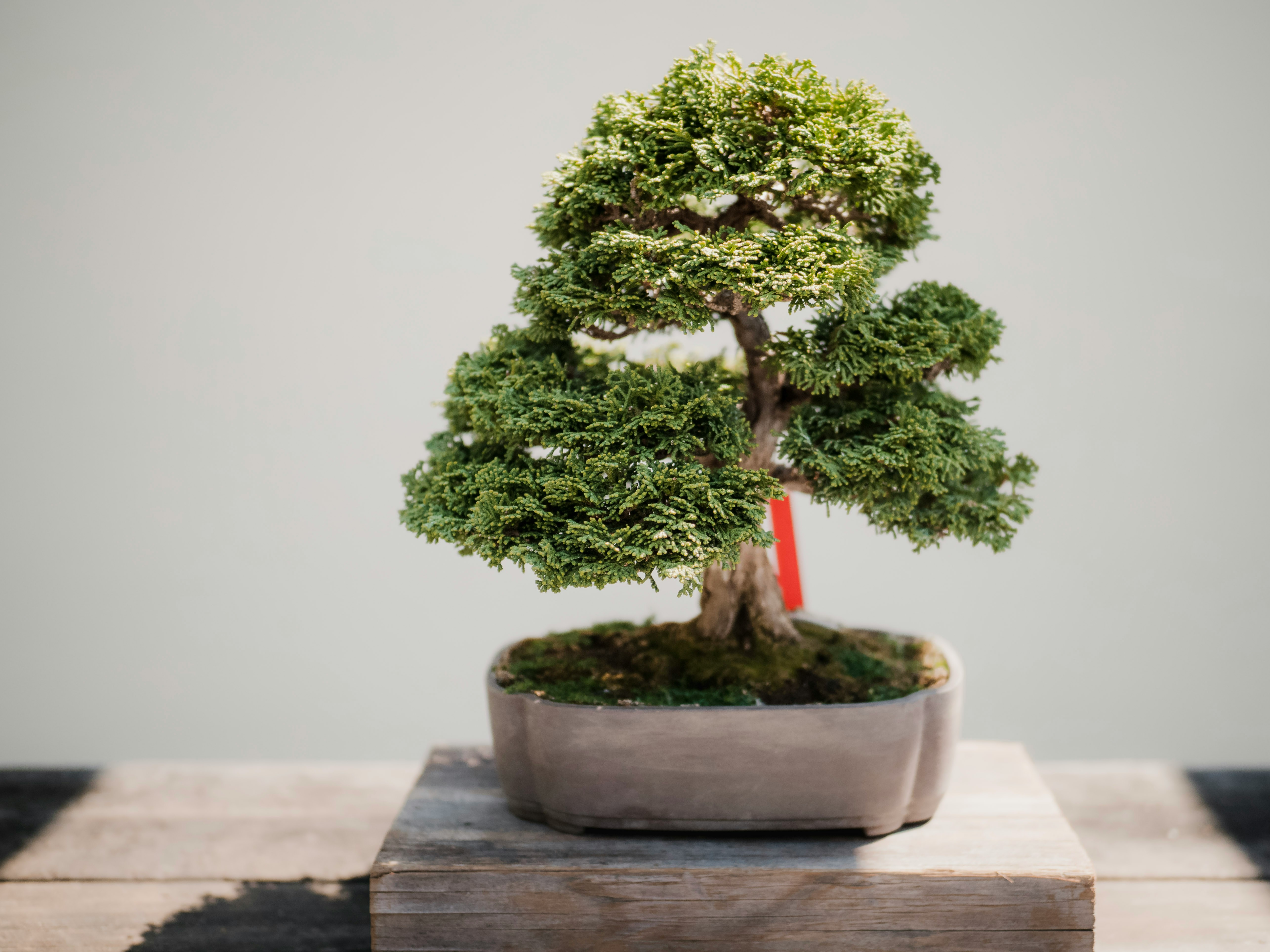
Buy bonsai trees from 4 types of sources, ranked by quality:
- Specialized bonsai nurseries — highest quality, expert advice, trees are styled and in proper bonsai soil. Prices: $50–$5,000+.
- Bonsai club sales and exhibitions — member-grown trees at fair prices, good selection of locally adapted species.
- Online bonsai retailers — wide selection, shipped nationwide. Risk: you cannot inspect the tree before buying.
- Garden centers and big-box stores — cheapest option ($15–$40), but trees are often in poor soil, mislabeled, or stressed from indoor retail conditions.
Buying Bonsai Trees Online
Buying bonsai online works well when you choose a reputable retailer with individual tree photos. Avoid listings that show a "stock photo" — you should see the exact tree you will receive. Reputable online sellers ship trees bare-root (no pot) or in their bonsai pot, wrapped and padded to prevent shipping damage.
3 things to confirm before buying bonsai online:
- The listing shows the actual tree (not a representative photo)
- The seller specifies the species with a botanical name (not just "bonsai tree")
- The seller offers a live arrival guarantee in case of shipping damage
Who Sells Bonsai Trees Near Me?
Search for "bonsai nursery" + your city on Google Maps to find local sellers. Local bonsai clubs (found through the American Bonsai Society, European Bonsai Association, or World Bonsai Friendship Federation websites) often host sales events and can recommend regional nurseries.
Farmers' markets, plant swaps, and botanical garden gift shops sometimes carry bonsai. For nursery stock to convert into bonsai yourself, visit any local garden center and look for trees with thick trunks, visible root flare, and low branching.
How Much Does a Bonsai Tree Cost?
Bonsai tree prices range from $15 for nursery stock to over $1,000,000 for museum-grade specimens. Price is determined by 5 factors: age, species, trunk thickness, level of training, and the reputation of the artist or grower.
| Category | Price Range | What You Get |
|---|---|---|
| Nursery stock (prebonsai) | $10–$50 | Young plant, unstyled, regular soil |
| Starter bonsai | $30–$100 | Basic styling, bonsai pot, 1–3 years trained |
| Intermediate bonsai | $100–$500 | Developed structure, proper soil, 5–15 years old |
| Specimen bonsai | $500–$5,000 | Exhibition-quality styling, mature trunk, 15–50+ years |
| Masterpiece / Collector | $5,000–$100,000+ | Old specimens, named trees, artist provenance |
| Museum-grade | $100,000–$1,000,000+ | Historical trees, national treasures, centuries old |
Why Are Bonsai Trees So Expensive?
Bonsai trees are expensive because their value increases with age, and age requires years or decades of skilled, hands-on care. A 50-year-old bonsai has been watered, pruned, wired, repotted, and monitored through 200 growing seasons. That accumulated labor and expertise is reflected in the price.
5 factors that increase a bonsai tree's price:
- Age. Older trees with thick trunks, aged bark, and fine ramification (tiny branch networks) command higher prices.
- Species. Slow-growing species like Japanese White Pine and Japanese Black Pine take decades to develop and cost more than fast-growing species.
- Pot. Antique or handmade ceramic pots from noted Japanese or Chinese potters can add hundreds or thousands to the total value.
- Artist provenance. Trees styled by recognized bonsai masters (Kimura, Abe, Suzuki) carry premium prices tied to the artist's reputation.
- Collection source. Yamadori trees (collected from the wild with government permits) with naturally weathered trunks and deadwood are rarer and more valuable than nursery-grown specimens.